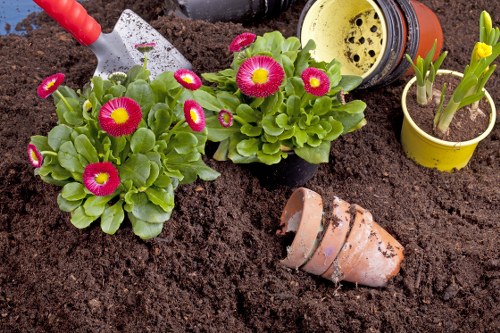
Recycling and Sustainability for Gardener Coney Hall
Welcome to the sustainable page for Gardener Coney Hall. Our commitment is to create an eco-friendly waste disposal area and a sustainable rubbish gardening area that supports healthy soil, local biodiversity and clear, practical recycling. As a Coney Hall gardener team we balance day-to-day green maintenance with long-term waste minimisation, diverting materials from landfill and helping the wider community benefit from better resource use.Our approach to green waste and resource recovery
The Gardener at Coney Hall operates with a layered approach: reduce, reuse, recycle, and recover. We work closely with borough-level policies to ensure that gardening in Coney Hall aligns with the local waste separation systems — including garden waste collections, food caddies and mixed recycling streams for glass, paper and plastic. By aligning our site operations with the borough's approach we increase capture rates for compostable material and recyclable packaging while preventing contamination.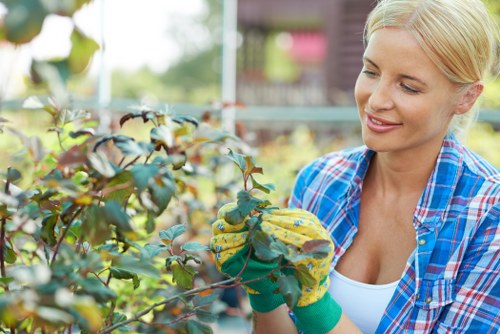 We prioritise an organised site layout: designated compost bays, a segregated bulky waste footprint for branches and timber, and dedicated containers for glass, cans and plastics. Our sustainable rubbish gardening area includes clear signage, colour-coded bins and partner-led information to encourage proper sorting at source. These practical steps help raise the capture rate of recyclables and reduce haulage emissions by lowering the volume sent to landfill.
Local infrastructure underpins our model. We coordinate collections to local transfer stations and materials recovery facilities that accept garden waste, woodchip, inert soil and mixed recyclables. Our preferred nearby transfer stations are chosen for capacity, processing options (in-vessel composting, AD for food waste) and short road distances to cut transport emissions. Local transfer stations form a vital link between the gardening site and downstream recycling markets.
Partnerships and circular reuse
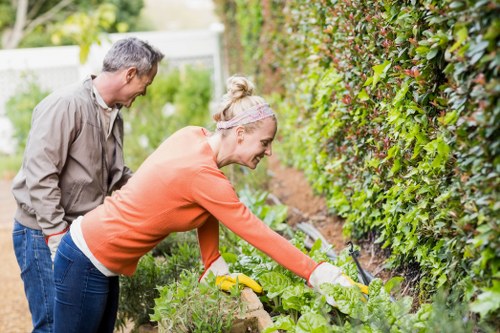
We work with charities and community organisations to extend the life of items removed from gardens. Plant pots, quality tools and reclaimed timber are suitable for donation to local groups; soft furnishings and textiles are routed to charity re-use streams rather than disposed of. Through these partnerships our Coney Hall gardening services promote community reuse, support social enterprises and create local circular-economy benefits. Partnerships with charities help us divert substantial tonnage from disposal each year.Key recycling activities on site reflect borough schemes and include:
- Garden waste composting and municipal green bins
- Food waste caddy collections and on-site composting trials
- Glass, paper and mixed plastic separation in line with local authority collections
- Bulky item triage for reuse, repair or transfer to resource recovery
Targets and transparency matter. Our site-level recycling percentage target is an ambitious but reachable 65% diversion from landfill within three years, with staged milestones each year. This target complements borough ambitions and the wider municipal waste strategy, ensuring that every tonne of green and recyclable waste is assessed for reuse, composting or material recovery. We report progress internally and use quality checks to minimise contamination and improve sorting.
 Fleet decarbonisation is integral to an eco-friendly waste disposal area. We are rolling out low-carbon vans for collections and small-scale haulage: a mix of electric vehicles for short trips, plugin-hybrids for flexible range, and routes optimised for load efficiency. The benefits include reduced NOx and CO2 emissions, quieter neighbourhood operations and eligibility for low-emission zones. Low-carbon vans are used for garden waste runs, bulky-item pickups and charity drop-offs.
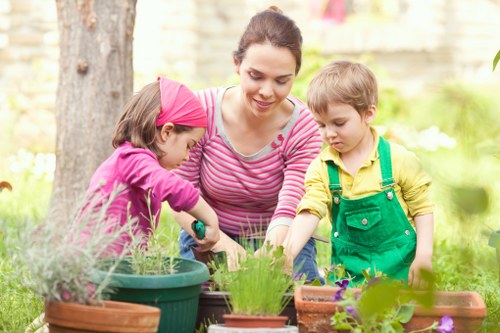 In practice, the sustainable rubbish gardening area is designed to be replicable and community-friendly. We train staff and volunteers on correct sorting, provide visual guides for residents and schedule regular charity collections to keep reusable materials in circulation. The Coney Hall gardener team also trials small-scale innovations such as local compost swaps, community mulch banks and collaborative soil regeneration projects to close nutrient loops and reduce the need for external inputs.
To summarise our commitments: we maintain an eco-friendly waste disposal area that is aligned with borough separation schemes, targets a 65% recycling and diversion rate, coordinates with local transfer stations and partners with charities to maximise reuse. Our fleet transition to low-carbon vans complements on-site measures, making Gardener Coney Hall a model for sustainable gardening in the neighbourhood.
By choosing to work with a Coney Hall gardening services provider that emphasises sustainability you help preserve green spaces while reducing waste and emissions. Gardening in Coney Hall can be both beautiful and responsible — from compost pile to community benefit.
Join us in supporting a cleaner, greener Coney Hall by adopting straightforward separation practices, supporting charity reuse streams and encouraging efficient collection schedules. Together, the gardener community and residents can make a measurable difference to local recycling rates and soil health without compromising the quality of green spaces.